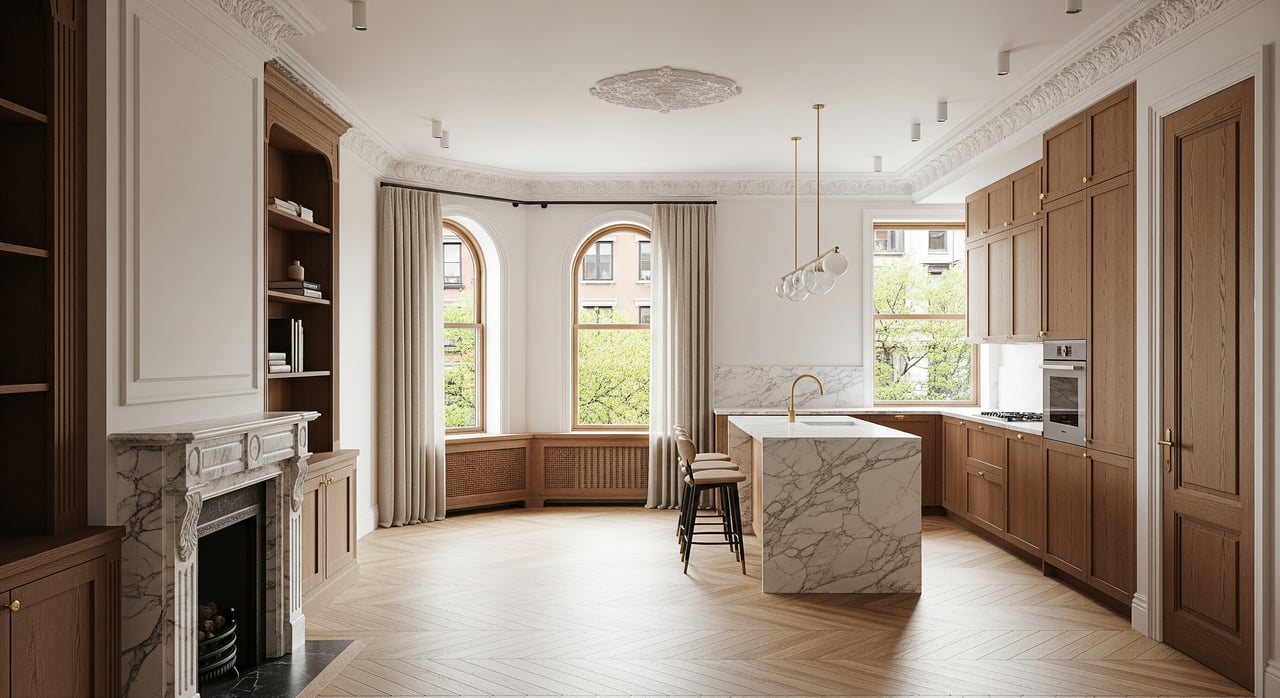
Dreaming about opening a kitchen, adding a bath, or swapping in quieter windows in a classic prewar on the Upper West Side or Upper East Side? You are not alone. These homes have character and great bones, but they also come with rules that protect the building and your neighbors. In this guide, you will learn the key basics that shape prewar renovations on the UWS and UES, from plumbing stacks to window approvals, timelines, and board steps. Let’s dive in.
What makes UWS/UES prewar unique
Prewar buildings in these neighborhoods include co-ops, condos, and brownstones. Co-ops are common and usually have stricter alteration rules than condos. Interiors often feature lath-and-plaster walls, plaster ceilings, wood windows, and steam or hot-water radiators.
Plumbing runs in vertical “stacks,” which limits where kitchens and baths can move. Many apartments also started with smaller electrical service than modern needs. Large parts of the UES and UWS sit in historic districts, so exterior-visible changes may require approval from the NYC Landmarks Preservation Commission.
Wet plumbing and stack realities
Wet rooms like kitchens and baths are typically clustered around vertical soil and waste stacks. Moving them far from those stacks is often complex, costly, and sometimes not allowed by building rules.
- Keep “wet-over-wet” where possible. Stacking kitchens and baths vertically reduces risk for neighbors below. Many boards try to avoid “wet-over-dry,” where a new bath sits over a living room or bedroom.
- If wet-over-dry is considered, boards often require extra protections. Expect requests for sleeves, leak detection, secondary drains, accessible soffits, and strict limits on routing. Some buildings prohibit wet-over-dry outright.
- Gravity drainage needs slope and access. Long horizontal runs through neighbor ceilings raise risk and draw heavier board scrutiny.
Moving your kitchen or bath
Keeping wet rooms near existing stacks lowers cost, shortens timelines, and reduces risk. Full relocations typically trigger structural coordination, slab or ceiling work, Department of Buildings filings, and more board review. Build in time for engineering and expect higher contingency.
Practical tips before you design
- Map exact stack locations and chase sizes during early walkthroughs.
- Get a licensed plumber’s assessment to confirm feasibility and condition of existing stacks.
- Plan for shut-offs, riser access, and future maintenance points that the board will want to see.
Electrical capacity for modern living
Many prewar apartments were not designed for today’s electrical loads. You may find limited circuits, older wiring, or fused systems.
- When upgrades are needed. Adding an electric range, multiple AC units, central air, or an electric dryer often requires dedicated circuits and a panel upgrade. Larger changes may involve the building’s electrician or utility coordination.
- Co-op limits. Even if you want more amperage, a building’s main service may cap what you can get. Condo and co-op rules still apply, and substantial work usually needs DOB filings.
- Practical solutions. Consider efficient appliances, multi-split ductless systems, or a subpanel inside the unit. Always start with a licensed electrician’s load assessment to identify safety issues and define the right scope.
Windows, sound, and historic approvals
Original wood double-hung windows add charm, but they can be drafty or loud. Many UWS/UES buildings require that replacement windows match the original exterior look.
- Historic districts. If your windows are visible from a public way in a landmark district, you will likely need approval from the NYC Landmarks Preservation Commission. Even outside of landmark zones, many boards require consistent façade appearance.
- Options and trade-offs. In-kind wood sash typically win easier approvals and have strong longevity. Aluminum-clad or vinyl with wood interiors can work if profiles match and the board signs off. Interior or exterior storm windows can boost comfort without full replacement.
- Installation logistics. For multi-story buildings, you may need sidewalk protection or scaffolding. If window work ties to façade programs like Local Law 11, timing and access must be coordinated.
Co-op vs condo: alteration agreements
Condo approvals are often simpler, but rules still apply. Co-ops typically require a formal Alteration Agreement with detailed plans, contractor insurance, permits, deposits, and clear construction protocols.
- What boards expect. Stamped drawings when structural work is involved, DOB permit plans, contractor qualifications and insurance, debris and dust controls, elevator protection, and construction hours are standard.
- Typical review steps. Pre-submission research can take 1 to 2 weeks. Assembling a board package often takes 2 to 6 weeks. Board review commonly ranges 2 to 8 weeks, and can extend if questions arise. DOB review runs in parallel or after board approval, depending on scope.
- Red flags that slow approvals. Underqualified contractors, unclear plans, added loads on building systems without engineering sign-off, and new wet rooms that are not stacked often lead to delays.
Realistic timelines and costs
Construction time begins after approvals. Your total schedule will include board, DOB, and possibly LPC reviews.
- Cosmetic refresh. Painting, fixture swaps, and minor work within existing locations often take 6 to 12 weeks.
- Mid-level renovation. A kitchen plus one bath with limited relocation typically runs 3 to 6 months.
- Full gut renovation. A complete rework with new MEP and layout changes often takes 6 to 12 months for a single apartment. Larger or full-floor homes can take 9 to 18 months.
- Windows. A few days per opening and often 1 to several weeks for a whole unit, plus added months if LPC or façade permits are required.
For prewar gut projects, plan a 15 to 25 percent contingency. Expect extra time if you propose moving wet rooms, changing structure, or working on visible façade elements.
Who you need on the team
A well-run project starts with specialists who know Manhattan prewar buildings.
- Architect. Prepares plans, aligns with board rules, coordinates DOB and, if needed, LPC.
- Licensed general contractor. Manages site safety, insurance, schedule, and building compliance.
- Expeditor/permit filer. Navigates DOB submissions and inspections.
- Structural and MEP engineers. Handle load-bearing changes and right-size electrical, plumbing, and HVAC.
- Environmental consultants. Arrange lead and asbestos testing and abatement plans when older finishes are disturbed.
Early professional input reduces surprises, speeds approvals, and protects your budget.
Pre-offer and pre-construction checklist
Use this list to set a clear path before you commit to a property or a scope.
- Ownership and rules
- Confirm co-op vs condo and request a sample Alteration Agreement.
- Ask about construction hours, elevator use, debris rules, required deposits, and insurance limits.
- Building status and constraints
- Find out if the building is in a landmark district and whether neighbors have approved window or façade changes.
- Ask about electrical service capacity, plumbing stack upgrades, boiler and riser condition, and any active or planned Local Law 11 work.
- Feasibility tests
- Schedule an early electrical load assessment and a plumber review to locate stacks and evaluate condition.
- Commission lead and asbestos testing if you will disturb old finishes or insulation.
- Confirm whether proposed window changes are visible from the street and likely to need LPC review.
- Team and documentation
- Collect contractor references for similar co-op/condo projects on the UWS and UES.
- Prepare an alteration-ready package with draft plans, insurance certificates, and contractor qualifications.
How The Thomas Team helps
You want a beautiful result and a smooth process. The Thomas Team combines brokerage, construction oversight, and design expertise so you can buy, renovate, and sell with confidence. We help you evaluate a unit’s potential before you offer, shape a scope that boards can approve, and manage the details that protect your timeline and budget.
Ready to talk through your plan or a specific address on the UWS or UES? Connect with Corrin Thomas for a clear path from concept to keys.
FAQs
Can I move my kitchen away from the existing stack in a UWS/UES prewar?
- Often not without major cost and added approvals; boards typically prefer stacked wet rooms and may restrict long horizontal runs.
How long do co-op boards take to approve a renovation on the UES or UWS?
- Many reviews fall in the 2 to 8 week range, but timing varies by building and scope.
Do I need DOB permits to update a kitchen or bath in a prewar apartment?
- Usually yes for plumbing or electrical changes; structural changes also require permits and sign-offs.
Will replacing windows in a prewar unit require Landmarks approval?
- If windows are visible from a public way in a landmark district, approval is likely required; even outside those areas, boards often mandate matching exteriors.
How do I know if my prewar wiring can support modern appliances and AC?
- Get a licensed electrician’s assessment early; you may need dedicated circuits, a panel upgrade, or a subpanel to meet demand safely.
What insurance and deposits do co-ops usually require for renovations?
- Expect contractor general liability and workers’ comp with the co-op named as additional insured, plus construction and restoration deposits.
What happens if asbestos or lead is found during my renovation?
- Work pauses for testing and regulated abatement by certified contractors, which adds time and cost and must be coordinated with permits and the board.